
Proof Based Marketing Framework: Build Buyer Trust in 2026
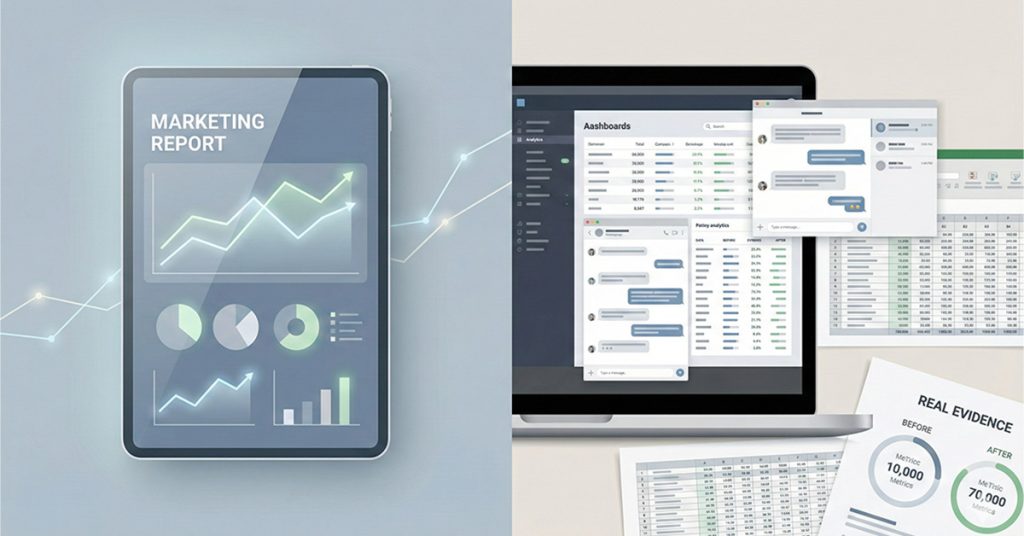
In 2026, buyer behavior has changed.
People no longer trust polished case studies, exaggerated screenshots, or vague growth claims.
If your marketing looks impressive but buyers still hesitate, this is the reason.
Proof based marketing replaces claims with visible evidence and builds trust through transparency.
This guide explains:
- What proof based marketing really is
- Why traditional case studies are losing trust
- The five step proof framework
- How to apply it in real campaigns
What Is Proof Based Marketing?
Proof based marketing is an evidence first approach where buyers can clearly see how results happened.
Instead of saying:
“We increased conversions by 42 percent”
You show:
- The conversation that identified the problem
- The data before and after
- The mistakes made during execution
- The fix that actually worked
When buyers understand the process, trust follows naturally.
Why Proof Based Marketing Matters in 2026
Trust is declining because:
- AI generated case studies are everywhere
- Screenshots are easy to manipulate
- Testimonials feel recycled
- Buyers research deeply before purchasing
Trust now comes from process visibility, not presentation.
Google reflects this shift by rewarding transparent and experience driven content.
Proof Based Marketing vs Traditional Case Studies
Traditional case studies focus on polished success stories.
Proof based marketing focuses on visible evidence.
| Traditional Case Studies | Proof-Based Marketing |
|---|---|
| Polished PDFs | Raw, visible evidence |
| Success only | Failures + fixes |
| Claims | Verifiable proof |
| Marketing tone | Operational reality |
| High skepticism | High trust |
This difference changes how buyers evaluate credibility.
The Five Step Proof Based Marketing Framework
Step 1: Show Real Conversations
Buyers want to see how decisions are made.
Examples include:
- Slack or internal chat snippets
- Emails discussing problems
- Planning notes or task comments
Why it works:
It proves results come from thinking, not luck.
Step 2: Present Raw Data
Avoid over designed charts.
Show real dashboards, spreadsheets, and before after numbers.
Why it works:
Raw data feels honest and allows buyers to judge progress themselves.
Even small improvements feel believable when shown clearly.
Step 3: Share Failures and Fixes
No campaign works perfectly.
Show:
- What failed
- Why it failed
- What changed
- What improved
Why it works:
Honesty builds more trust than perfection.
Step 4: Make Proof Easy to Read
Evidence loses power if it is hard to scan.
Follow these rules:
- Short paragraphs
- Clear headings
- Bullet points
- Bold key metrics
- Visual proof where possible
Buyers should understand the proof in seconds.
Step 5: Offer Optional Downloads
Optional resources increase value without pressure.
You can offer:
- A proof collection checklist
- Screenshot formatting guidelines
- Failure documentation templates
This positions you as helpful, not sales driven.
How to Apply Proof Based Marketing Correctly
- Keep a consistent proof format
- Share only relevant examples
- Add short context to every screenshot
- Update proof regularly
- Highlight progress, not perfection
Trust compounds over time.
Final Takeaway
Buyers no longer trust claims.
They trust visible effort, honest data, and transparent processes.
Proof based marketing works because it matches how people make decisions in 2026.
Stop polishing results.
Start showing reality.
Want to Apply This Framework?
You can start applying the proof based marketing framework today. If you want professional guidance and ready-to-use templates, learn how my marketing services help implement this framework in real campaigns.